Tag Archives: cranes

5 Reasons to Pick a Load King Crane for Your Next Forestry Project

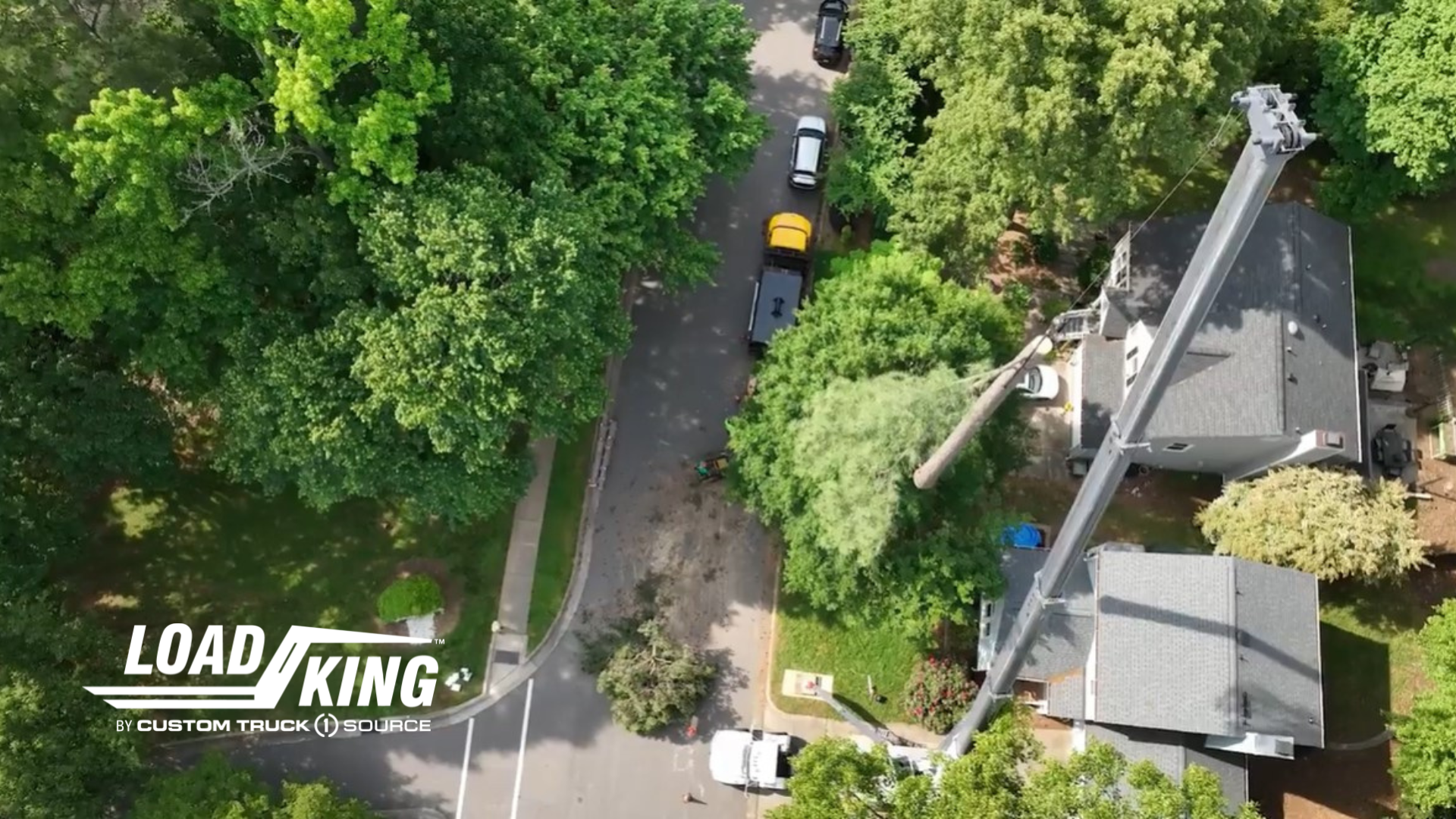
Recently, we had the pleasure of spending the day with Triangle Crane, a leader in residential tree services, to see firsthand how our Load King Crossover series is enhancing their operations. This collaboration allowed us to gain valuable insights into the practical applications of our forestry boom trucks and how they contribute to the efficiency and success of businesses like Triangle Crane. Join us as we explore the benefits and real-world impact of our Load King Crossover series in the residential tree industry. 

Roadability / Movability

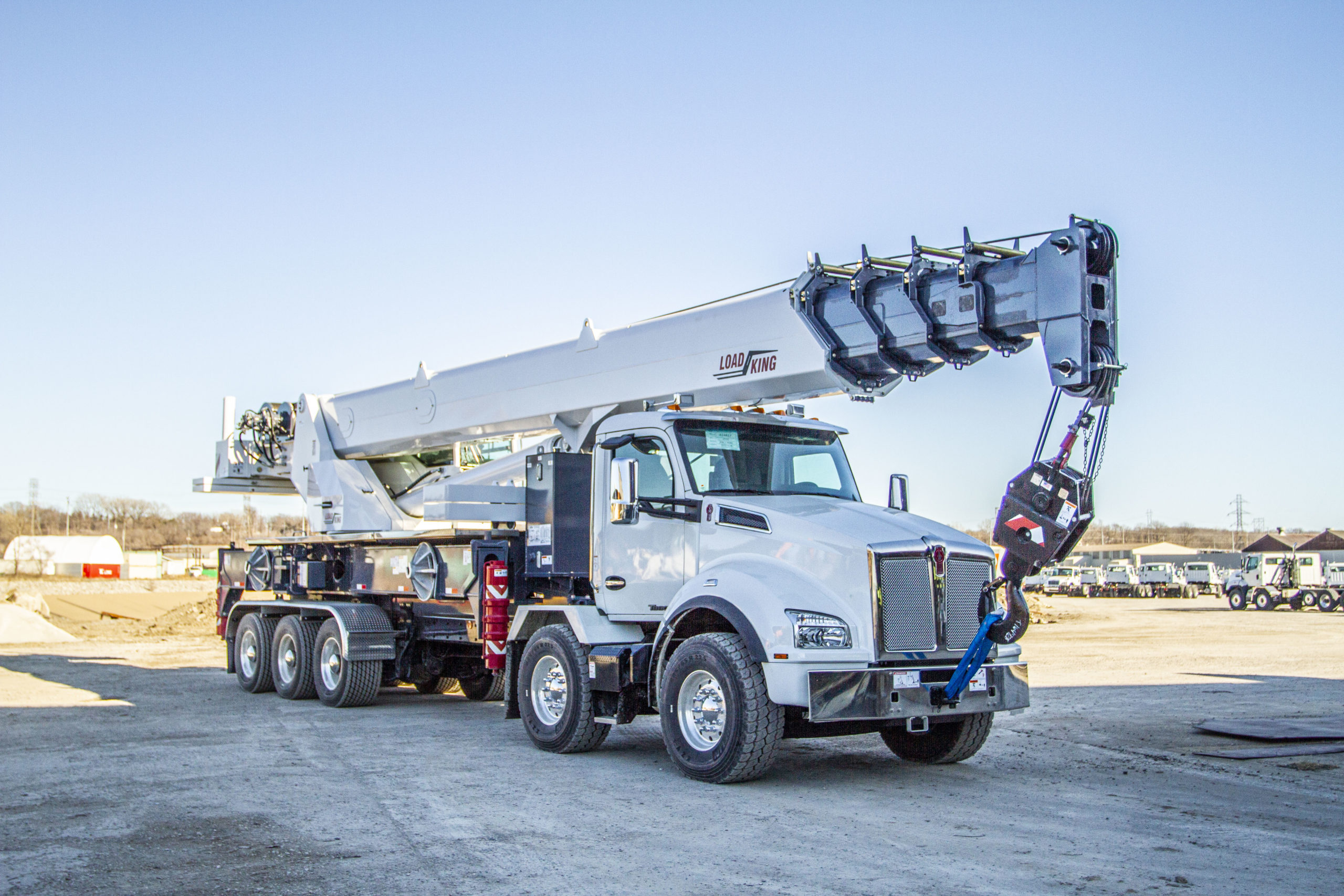
Load King’s cranes stand out for their exceptional roadability and movability. Thanks to super-single tires, these cranes are incredibly easy to maneuver, even in the tight confines of residential and city environments. Super-single tires offer a unique blend of durability and flexibility, allowing the cranes to navigate narrow streets and confined spaces easily. This enhanced mobility ensures that your team can quickly and efficiently move the crane to where it’s needed most, minimizing downtime and increasing productivity. 

“It’s a big truck; this is not a pick-up truck, so you have to plan for that. Making turns into neighborhoods and whatnot, you can get away with it; you just have to have a good driver,” said Steve Kurtz, Owner/Operator of Triangle Crane.  

Size

When it comes to crane size, Load King doesn’t compromise. With boom heights spanning up to an impressive 160 feet, these cranes provide unparalleled picking power and reach. This is particularly beneficial for residential tree work, where cranes often need to access tall trees or reach over obstacles like houses and fences. The substantial boom height allows operators to tackle the furthest trees on a property with confidence. Whether you’re lifting heavy loads or reaching high branches, Load King’s cranes deliver the performance and versatility required for the job. 

“The size and capacity makes [it] a solid crane. One of our main operators, Glenn, has been using [the crane] for a while, and [Glenn] says it feels really good, really solid – especially when you get into picking the bigger wood from the base logs on trees,” said Kurtz.

Quality of Build

Load King’s commitment to quality is evident in every aspect of their crane design. The X-style outriggers are a prime example, offering superior stability and ease of use. These outriggers provide a wide stance, enhancing the crane’s balance and ensuring it stays firmly in place during operation. The formed boom, another hallmark of Load King’s engineering, boasts a durable design that can withstand the rigors of heavy use. Overall, the sturdiness of Load King’s cranes means they are built to last, providing reliable performance over the long term. 

“This unit [Load King 60-150] is very reliable; it’s the biggest of our three cranes, so it allows us to have a lot more reach and capacity,” said Kurtz.

Stability and Safety

Safety is paramount in crane operations, and Load King excels in this area with features designed to maintain stability during maneuvers. The cranes stay firmly in place while performing lifts, reducing the risk of accidents and enhancing operator confidence. This stability is crucial when working in residential areas, where precision and control are essential. Load King’s safety focus ensures that operators and bystanders are protected during crane operations. 

“The Picking Power is the best feature. With this crane, you can stretch it out 135 feet and still make solid picks. The crane does not move. It’s been impressive…This unit sits nicely and planted [so it’s] solid,” said Glenn Arscott, Crane Operator.

Great Service & Support

Load King’s commitment to customer satisfaction extends beyond the sale of their cranes. With over 75 support locations across North America, we provide extensive service and support to keep your equipment in peak condition. This broad support network means that help is never far away, whether you need routine maintenance or emergency repairs. Customers frequently praise Load King for their responsive and knowledgeable service teams, highlighting the company’s dedication to keeping their cranes operational and their clients satisfied.  

“I know the number one thing when you’re thinking about buying one of these [cranes] is sales and support. We were confident that Custom Truck has the sales team to present the trucks and the support [team] behind it to be able to back [it] up. It doesn’t matter how good your equipment is; you’re always going to have downtime and maintenance,” said Chris Baley, Owner/Operator of Triangle Crane.

Contact Us

Load King’s cranes offer a combination of mobility, impressive size, superior build quality, stability, and excellent service support, making them an ideal choice for residential and city work. Our cranes are designed to meet the unique challenges of these environments, ensuring efficient and safe operations. If you’re looking for a crane that delivers on performance and reliability, consider Load King for your next project. Contact Load King today to learn more about our range of cranes and how we can support your needs. 


Evolution of Crane Control

Without the existence of cranes, most of our world as we know it would not be the way that it is. Cranes can be used on any construction site and have the strength to lift heavy-weighted materials such as concrete slabs, pipes, grains, steel, and much more. 

Cranes were first used as irrigation tools, In ancient Egypt, back in 3000 BCE. During the 6th century, the Greeks made the first record of using cranes and changed them by adding pulleys. Fast forward to 1838, when William Armstrong invented the world’s first hydraulic crane.

Armstrong’s crane was successful enough to grow his company enough to make over 100 cranes. His invention of cranes has evolved into today’s cranes.  


Mechanical

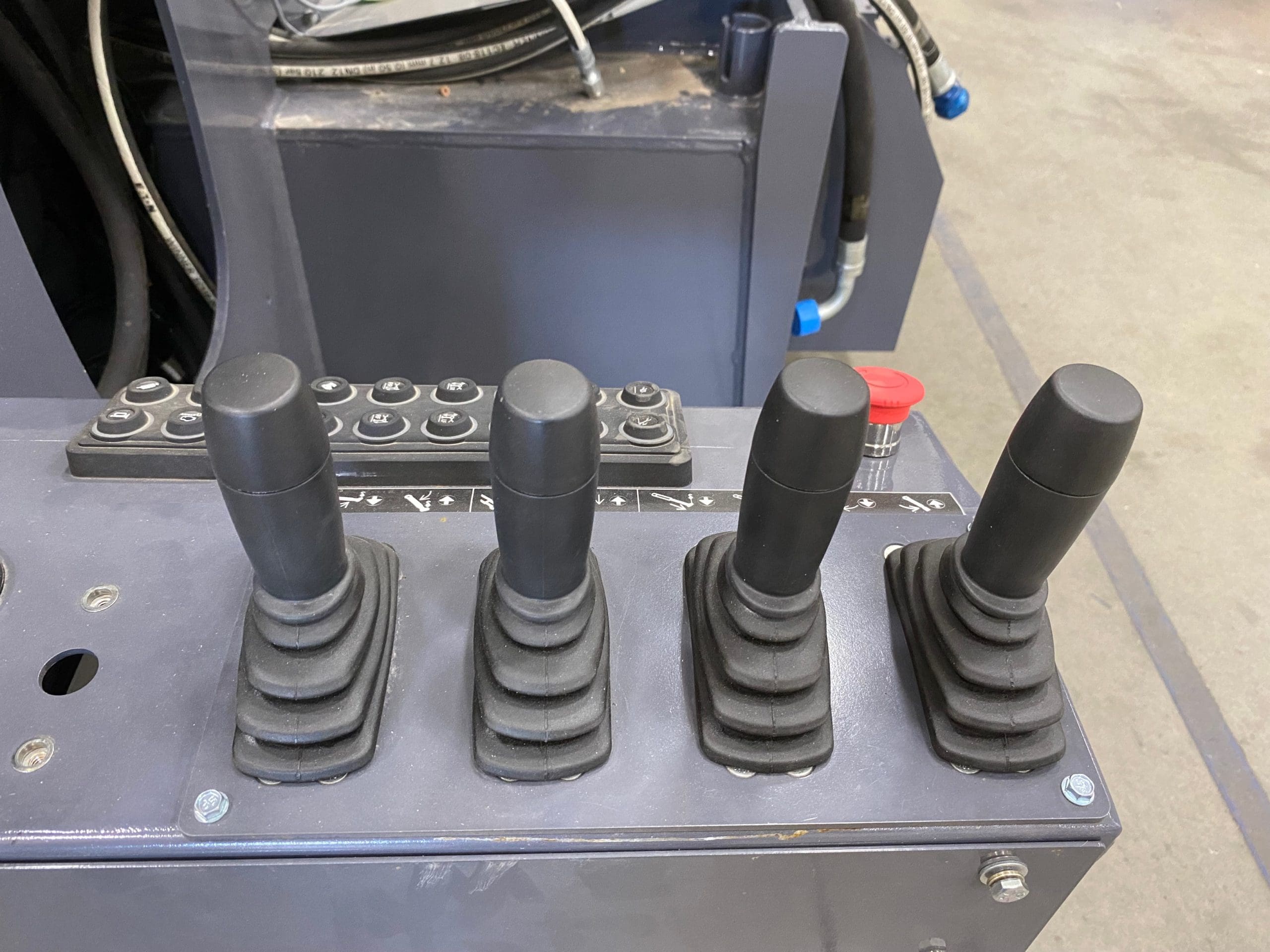
Mechanical crane systems are the simplest to understand and run. To run a mechanical crane, you move one of the four levers that are assigned to each crane function either forward or backward.  

Each lever is set up so that the forward and backward movement is associated with the specific function. For instance, winching the cable up and down is associated with pulling a lever forward or backward. Extending or retracting the boom, raising, or lowering the boom, and slewing the crane clockwise and counterclockwise are the other functions. Each is assigned to a separate lever. 

The speed of each function can be controlled in two ways. As you move the lever further from the center location, the valve is opened further, and more oil is sent to the function. You can also adjust speed by using the throttle foot pedal.  

One of the advantages to the mechanical system is its simplicity. Since you are mechanically opening and closing the valve, a technician can easily trace a control problem.  


Hydraulic Pilot

The hydraulic crane system uses oil to generate the lifting power needed to pick up heavy materials. A system of hoses and pipes supply the oil to the cranes systems. On a crane controlled by pilots, there are two separate systems – a low pressure system for the controls and a high-pressure system for the crane.  

The cranes controls can either be run with single axis joysticks, each matching the controls of the mechanical system, or they can be dual axis. With the dual axis, multi-functioning is a matter of using the corners of the joystick area opening more than one valve section at a time. 

When the pilot system is activated, it opens and closes the valves for the high-pressure system to activate the crane functions. 

Hydraulic pilot systems were most popular in the 80s and 90s as a transitional phase between mechanical and electric controls. 


Today

Today, most cranes are electric over hydraulic. Electric crane systems have been in use for a long enough time now that most experienced operators would prefer an electric system. The reason for this is because there is more adjustability built into the system. Mechanical controls offer no ability to customize the operator’s experience. The operator must learn to smoothly run the crane by use of the levers and throttle. There is a limited ability to adjust the hydraulic pilot controls, however this requires a service technician. 

The three main advantages to an electric over hydraulic system are the ability to fully customize the controls to the operator’s preference, more precise control over the valves, and the ability for the crane control system to react to inputs from both the operator, the crane, and the rated capacity limiter. 

This is how Load Kings new LK-1 control system is designed. To view our LK-1 control system video, please click here. Since Load King developed the control system, we can continuously add features. 

Crane Training and Certifications

Just like any job, there are multiple options to assist in achieving OSHA and regulatory compliance for hoisting and lifting professionals requiring training, evaluation, and qualification and/or national certification in both construction and general industry applications. 


While crane operator jobs are in high demand, the first step is determining which crane training program is correct for you.  

Below we have outlined NCCCO’s basic requirements.  

Some of the basic requirements are: 

  • You must be at least 18 years old 
  • Comply with substance abuse policies  
  • Pass written and practical examinations 
  • Agree to the code of ethics 

Physical requirements: 

  • Ability to distinguish colors 
  • Adequate hearing (including hearing aids) 
  • Normal depth perception and field of vision 
  • No evidence of loss of physical control (I.e., seizures) 


Because some states/cities that have their own codes may not recognize some federal rules. Consult the specific state/city codes where the crane is being operated. For example, the states of California, North Carolina, Washington, and Oregon have their own State OSHA guidelines.  


Below are a few links to help you get started:  

NCCCO Crane Certification

Overton Safety Training FAQs 

7 Signs You May Need to Replace Your Crane Parts

Regular maintenance of your cranes ensures that they perform efficiently. When not maintained properly, they can lead to serious problems for your business. Cranes don’t last forever. Over time, you may have to either fix or replace crane parts to ensure they are in good working order. How do you decide it’s time to get replacement parts for your cranes? Below are some of the signs that you need to call a professional and get replacement crane parts.

1. You Keep Calling for Multiple Crane and Parts Repairs

What is one sign that it’s time to upgrade your crane parts? You likely need to get new crane parts if you keep calling for repairs. Crane parts are also susceptible to wear and tear; they will become damaged over time, leading to more tech calls. Repair costs don’t only add up, but you also increase your facility’s downtime when you perform repairs. Doing this repeatedly can cost your business a lot. It may be more cost-effective to replace the crane parts completely. Newer parts can perform efficiently, leading to more productivity in your facility.

2. Expired Warranties

Manufacturers give out warranties for the crane parts. The warranties are likely also the expected lifespan of the parts. Check them whenever you are having issues with the major components. Are they still under the warranty period? If not, it may be time to get replacement parts. Call a technician so they can determine whether you only need to fix the parts or get a replacement.

3. Accidents

In the construction industry, safety is paramount. When your crane malfunctions, you need to call a professional and have it inspected. If your crane regularly causes minor accidents, it may be time to get replacements.

4. Affects Productivity

Equipment acquisition can be costly. This is why you need to make sure it performs efficiently,  contributing to generating revenue for your business. When your cranes keep having problems while operating, you need to call a professional so they can inspect your machine. If you don’t do something, your business may suffer. It may be time to get replacement crane parts. Don’t compromise the efficiency of your business operation.

5. It Fails Inspections

To ensure safety, you need to evaluate cranes through AME, OSHA and CMAA standards regularly. Evaluation can detect early problems that may lead to accidents or serious monetary losses for your business. When your cranes fail inspections, it may be time to get replacement parts. A complete replacement may be what you need to keep cranes performing.

6. Cranes No Longer Meet Expectations

When using cranes becomes the most important activity, you need to ensure that they work efficiently. It’s time to evaluate whether your cranes can handle difficult jobs. Keep a checklist to help you determine whether it’s time to get replacement crane parts or not.

Use this:

Can it still lift 100% of your crane’s capacity, or has it decreased?
Would you need multiple cranes for the lift of is one enough?
Is it giving your workers problems or issues at work?

Contact a professional when your cranes no longer meet or exceed expectations.

7. Wear and Tear

One of the most obvious signs that you need to get a replacement is when your crane parts are damaged, broken or worn out. Regularly inspect your cranes so you can catch this problem and avoid other issues down the road. When the parts are damaged, you definitely need to get replacements right away.

Never Ignore Minor Problems With Your Crane Parts

Like all other machines or equipment, they may malfunction or cause other problems. Never ignore even minor issues with a crane as it may lead to costly consequences like damaged goods or major accidents. Get in touch with a professional immediately so they can assist you with replacements.

Why Crane Inspections are Important

Crane inspections test the functionality and safety of your cranes. You need this to ensure that you don’t encounter problems during operation. Inspections can detect problems that may lead to serious consequences. You need to get an annual crane inspection not just to extend the lifespan of your cranes but to keep your employees safe.

Contact Custom Truck

We are committed to providing used and new cranes for businesses or crane buyers. This includes crane parts and services as well. Contact us right away if you need help with your trucks or cranes.


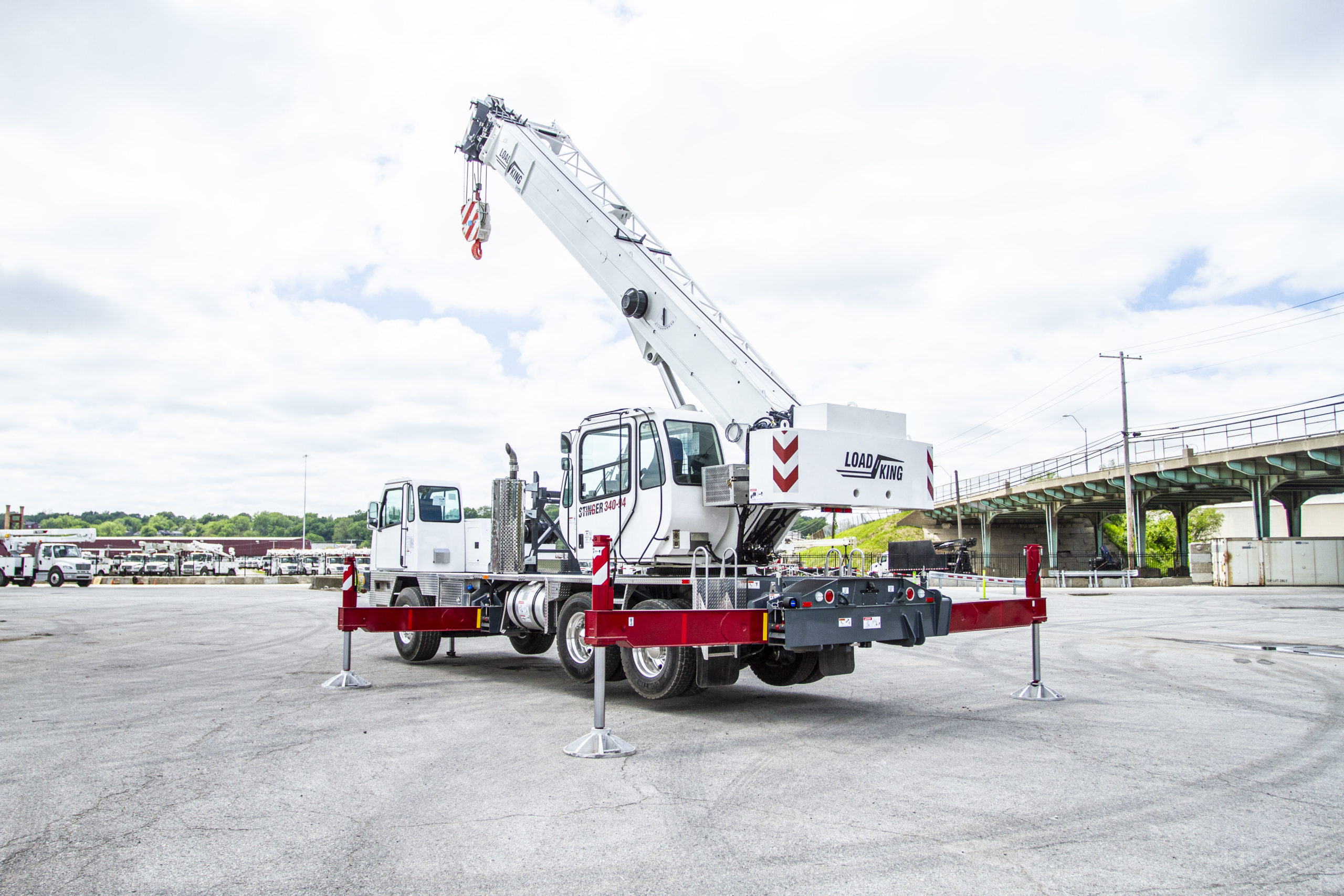
Load King Stinger 340-94 Crane
Choosing the Best Crane for Your Business

Whether renting, leasing, or purchasing a crane, the number of options available to you can be overwhelming. Don’t worry, there are 3 simple ways to narrow down your search. Read below for an outline of what steps to take to ensure the crane you purchase is just what you need.

1. Choose Your Type of Crane

In order to make this determination, we need to first define the types that are available.

  • Crawler Cranes – These have tracks, allowing them to navigate easily throughout a job site, even while carrying a load. They are ideal for jobs that require long, vertical reaches, high-capacity work, or long-term work.
  • All-Terrain Cranes – All-terrain (AT) truck cranes are able to travel at speed on public roads as well as on rough terrain job sites. That makes these well-suited for both on and off-road construction and industrial projects.
  • Rough-Terrain Cranes – Like their name implies, these are built to traverse rough and uneven terrain. This offers versatility for use on work sites, however, their low speed typically restricts their driving capabilities to the work site only.
  • Tower Cranes – Tower cranes are commonly used in the construction industry. They sometimes rise hundreds of feet into the air and can reach out just as far, so they will typically be used at any major construction site.
  • Truck Cranes – Truck cranes offer superior mobility and versatility while still having impressive lifting capacities.

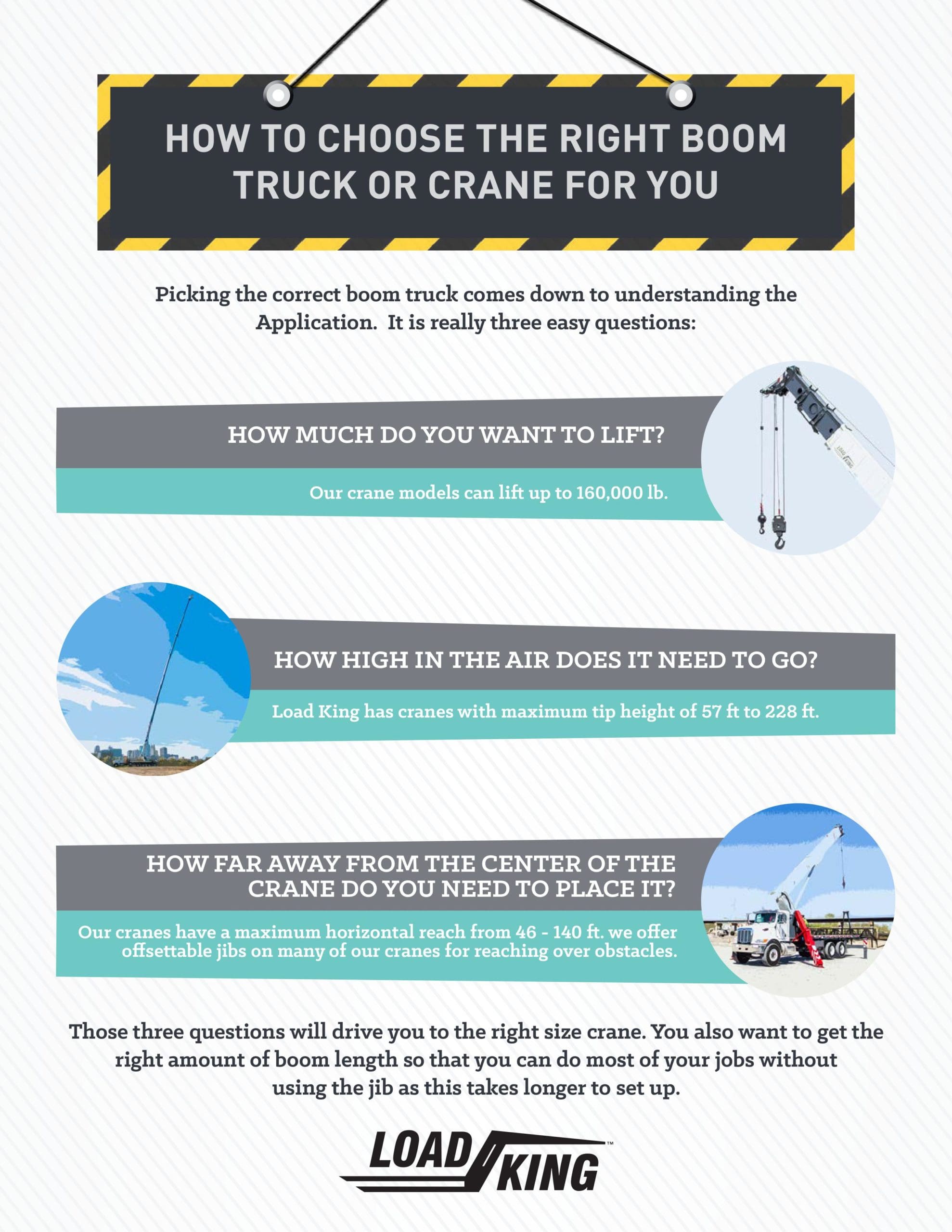
Once you’ve narrowed down the type of crane that should be part of your fleet, the question of size comes into play. Check out our graphic that breaks down the three things to ask regarding the size of the crane you’ll need. And read further for a deeper dive into each of these essential queries.

2. Determine Weight Requirements

Not considering any one particular job, think about the types of markets the crane will apply to. Are there lifts where you are routinely renting a crane, and want to bring those in-house? You should always remember that you can send a larger crane to pick smaller load, but the opposite will never work. Also take into consideration the type of rigging equipment that is necessary:  blocks, spreader bars, straps, etc. as these must be counted in the total load.

3. Determine Boom Length Requirements

How high in the air does my crane need to go?

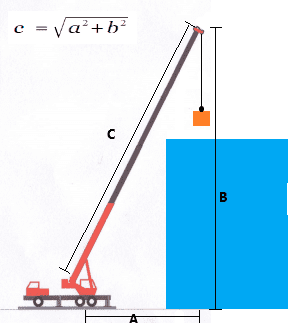
The necessary boom length is actually the function of this question and the following one, but it is easier to understand one at a time. Working around residential housing requires a different tip height than working on cell phone towers.  Small commercial buildings up to five stories are quite common, requiring at least a 70 foot tip height to allow for rigging and handling. Man-basket work is also quite common and working heights continue to grow. Nearly all cranes can be equipped with a jib or lattice inserts to increase working height, however this usually adds time to the setup and tear-down of the crane, and any terrain issues make erecting the jib difficult. The point is to try to do as many jobs as possible on the main boom, saving the jib for unique situations.


How far away does it need to lift or place loads?

This is the second part of the question that helps with boom length. As the load moves further from the centerline of rotation, the amount of leverage increases. Hold your beer out at arm’s length for a while, and you will see what I mean. Higher boom angles are more efficient for lifting. The longer the boom, the higher the angle when lifting at the same radius. Many cranes have some capacity at low boom angles, especially a knuckle-boom loader, but most cranes take advantage of the higher boom angles to lift.

Once you answer these questions, you can roughly judge the size of crane you need.  Keep in mind that a 50-ton crane would almost never be used to lift 100,000 pounds, because the radius is so close to the crane as to make it impractical.  You will need to gather some load charts for the target class of crane and use the values from the three questions above to see what minimum specification you will need.

This may sound a little complicated, but you don’t need to be an expert or do this all on your own. At Custom Truck One Source, we have a knowledgeable crane team that’s available to help you with each step along the way.


The Load King Stinger 80-160 which will feature the new Greer MG6 computer
The Greer MG6: Another Exciting Enhancement to Load King Cranes

American Cranes and Transport recently featured information on the new Greer MG6 Computer that Load King is incorporating into their crane line. Read below for more information and background on Load King’s history of partnership with Greer.

The first Terex 4792 RCL system was installed by Custom Truck in 1999 under the supervision of Greer. Load King is continuing a long history of collaboration with Greer on their newest crane, the Stinger 80-160. Greer has introduced a new computer – the MG6 – which will be incorporated into the entire Load King line.

The most significant benefit of moving to the MG6 computer from the MG5 is the serviceability of the unit in the field. The MG5 had pressure transducers, relays and a power controller inside a sealed enclosure. Failure of any part in the enclosure meant replacing the entire assembly. The MG6 now utilizes external components that can be remote mounted and individually replaced. Remote mounting also simplifies hydraulic routings and removes points of failure. Power distribution has been moved to an upgraded wiring harness and a separate CAN-based controller. This increases serviceability, reliability and improves the diagnostic capability of the system.

Migrating to the MG6 also allows Load King to introduce the TS7 touch screen display on the new Stinger 80-160 boom truck. This display features a 7-inch glass-front, glove-friendly touchscreen, enhanced clarity and full color graphics in an IP67 enclosure. Load King boom trucks under 40 tons will continue to use the Insight display together with the new MG6 computer. Load King will be bringing more CAN-based controllers to the entire line. Moving to the CAN-based MG6 is a first step, the company said. Future enhancements will include things like CAN keypads for outrigger controls and upgraded remote controls.

“Load King values our long-standing partnership with Greer, which has allowed us to provide our customers with innovative and quality products,” said John Lukow, senior vice president, cranes, Load King. “The RCL enables our customers to work at a high-level of efficiency, furthering their business goals. We’re proud of the technology we’re able to offer within our product lines thanks to this collaboration.


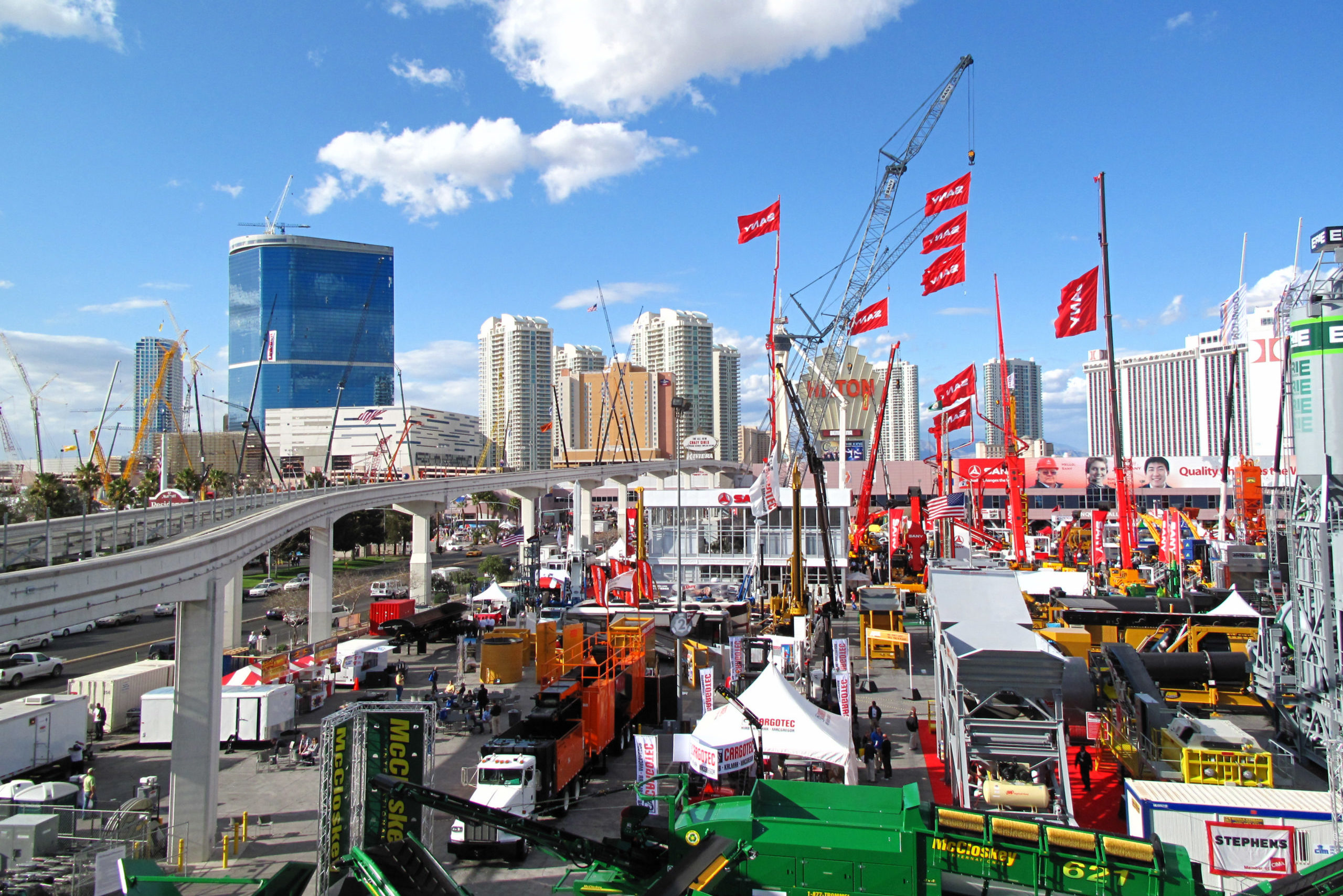
Overview of main exposition area at ConExpo 2011 in Las Vegas, Nevada
ConExpo-Con 2020: Load King Proudly Participates, Unveiling Two Of Its Newest Products

Save the dates March 10-14, construction people! ConExpo-Con, North America’s largest construction trade show, will be held in Las Vegas in 2020. You cannot miss this opportunity to see the latest equipment and technologies in your industry – that comes only once every three years.

The trade show will represent asphalt, aggregates, concrete, earthmoving, lifting, mining, utilities and so much more. There will be 2,800 exhibitors, 150 education sessions, and a chance to meet, greet, and network with fellow construction business owners, professionals, and industry leaders. All in a sprawling 2,500,000 square foot display arena.

No other show connects attendees from every major construction sector (engineering: 11%; sales/marketing: 13%; project/fleet managers: 15%, foremen/operators: 19% and executives: 42%). The educational sessions will teach you everything from decreasing downtime and improving efficiency to upgrading safety checks and employee retention strategies.

Load King is particularly excited to be participating in ConExpo this year with two, top-of-the-line products: the Load King Stinger 80-160 crane and the 2020 Freightliner 114SD 8×4 Load King 17′ Elliptical dump truck.

The crane, which will be on display at the Kenworth booth (booth # S62939), has an 80-ton capacity, six-section, full power, 160-foot main boom.  This boom will showcase a new double-keel design, that allows for a lighter, stronger boom than the four-plate it replaced.  The crane has two single-stage cylinders that provide different operating modes:  one focused on stability, and the other on structural capacity, making a better chart throughout.

It will also introduce a brand new 58-foot bi-fold lattice swing-away jib, making the maximum tip height 228 feet.  The Load King Stinger 80-160 will set up faster at the job-site due to increased speed of the outriggers and retain the modern tilt-cab from the 80-126, previously known as the Crossover 8000.  Several improvements to the hydraulic system will enhance the operating characteristics of the crane under load.

The Freightliner 114SD 8×4 Load King 17′ Elliptical dump truck features a 21-22 cubic yard capacity, 60″ side heights, and 1/4″ AR450 steel floor, sides, front doghouse, and tailgate. It has dirt shedding angles on the sides, top rail, tailgate, and hoist well and can handle anything from sand to large aggregates, riprap, and asphalt.  All of this and more, mounted on a new Freightliner 114SD, which offers high quality internal and external features as well, will make this unit your next favorite dump truck.

The strategy, as with any new additions to Load King’s state-of-the-art product lines, is to build upon the strong base of previous iterations, increase the number of applications they can serve, improve the operator experience, and increase return on investment for Load King’s loyal – and growing – customer base.

See you at ConExpo-Con 2020!